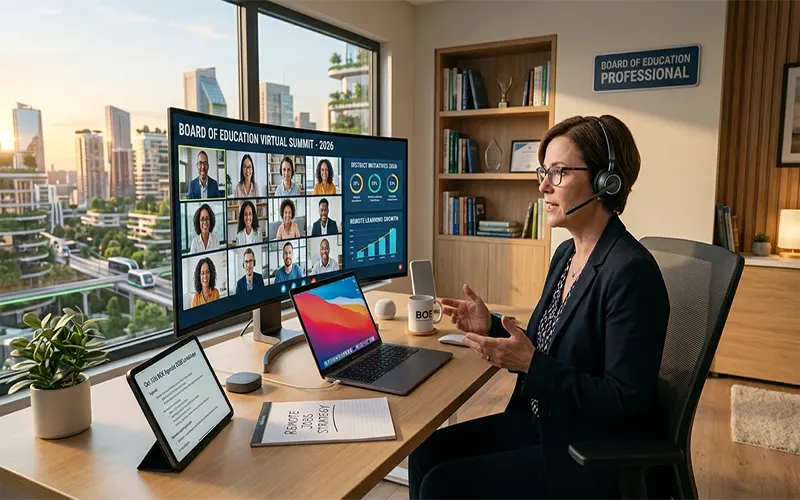
The image of a School Board of Education (BOE) professional has traditionally been one of leather-bound minute books, physical filing cabinets, and late nights in fluorescent-lit district offices. However, as we move through 2026, a digital revolution has quietly dismantled the “desk-bound” requirement for governance roles. Driven by the April 2026 ADA digital accessibility mandates and the rise of Agentic AI in public administration, school districts and EdTech firms are now offering a diverse array of remote and hybrid opportunities.
For the veteran board secretary, the policy analyst, or the district clerk, the transition to remote work is no longer a perk—it is a sophisticated career pivot. Here is a guide to the high-impact remote roles currently shaping the 2026 educational landscape.
1. Core Remote Roles within School Districts
Modern school districts are increasingly adopting a “Centralized Digital Office” model. This allows for administrative functions to be performed from anywhere, provided the professional has a secure, Zero Trust connection to the district’s servers.
- Remote Board Secretary or Clerk: While physical attendance at monthly board meetings is still common, the “pre and post” work has gone entirely remote. Remote secretaries manage digital agenda software (like BoardDocs or Simbli), coordinate with the Superintendent’s office via encrypted channels, and use AI-assisted transcription tools to audit meeting minutes for legal accuracy.
- Virtual Enrollment & Registrar Coordinators: The 2026 enrollment process is almost entirely paperless. Remote registrars manage student data, residency verification through digital portals, and oversee complex lottery systems for magnet schools. This role requires a deep understanding of FERPA (Family Educational Rights and Privacy Act) and high-level data security.
- Remote Policy & Compliance Analysts: School boards must constantly align their local policies with shifting state and federal laws. Remote analysts track legislative updates in real-time and draft policy language for board review. In 2026, this role often involves using AI agents to “cross-check” new state mandates against thousands of pages of existing district policy.
2. The Pivot to EdTech & Governance Consulting
Some of the most lucrative remote opportunities for BOE professionals exist outside the school district itself. Private companies that serve the education sector are desperate for “insider” knowledge.
- Board Governance Consultants: Many districts are still struggling to modernize. Consultants who understand the nuances of “Robert’s Rules of Order” and “Sunshine Laws” are hired to help boards transition to paperless governance and train new board members on ethical digital communication.
- Customer Success Managers (EdTech): Software companies like PowerSchool, Diligent, and Simbli hire former BOE professionals to manage their district accounts. Because you speak the “language of the board,” you are uniquely qualified to help other districts implement and optimize their governance tech stacks.
- Digital Accessibility Specialists: With the April 2026 ADA mandate now in full effect, districts face significant legal pressure to ensure all public-facing documents (including decades of board PDFs) are accessible to individuals with disabilities. Professionals who specialize in “Content Remediation” can find consistent, high-paying remote work assisting districts with this massive compliance hurdle.
3. The 2026 Essential Tech Stack
To thrive in a remote BOE role, you must move beyond basic word processing. The 2026 toolkit is defined by automation and security.
- AI-Assisted Transcription Auditing: You don’t just type minutes anymore; you “audit” the AI-generated draft. You must be able to recognize when an AI fails to capture the nuance of a legal motion or a public comment.
- Zero Trust Data Security: Because you are handling sensitive student and personnel records from home, you must be proficient in working within Zero Trust environments, which require continuous authentication and secure VPNs.
- Virtual Public Hearing Platforms: Mastery of Zoom for Government or Microsoft Teams for Education is essential. This includes managing “waiting rooms,” digital public comment queues, and ensuring a seamless experience for community members attending meetings remotely.
4. Navigating the Legal Hurdles: Compliance from Home
The biggest concern for remote BOE work is maintaining the “Public Trust.” Working from home does not exempt a professional from strict legal frameworks.
Expert Insight: The “Home Office” Sunshine Law
Even when working remotely, any “work product”—including draft agendas or emails regarding board business—is subject to the Public Records Act. Remote BOE professionals must maintain a strict “Digital Wall” between personal and professional devices to avoid having personal hardware subpoenaed during a records request.
- FERPA & HIPAA: Remote workers must ensure their home environment is secure. This means no smart speakers (like Alexa or Google Home) active during confidential board discussions and using encrypted screen-sharing tools for student discipline hearings.
- The “3-2” Hybrid Compromise: To balance the benefits of remote work with the need for face-to-face collaboration, many districts in 2026 have settled on a 3 days in-office, 2 days remote schedule for their executive staff, particularly leading up to major board votes or budget seasons.
5. Where to Find the Work
If you are looking to transition to a remote BOE role, you need to look where the “decision-makers” hang out.
- National School Boards Association (NSBA): Their career center is the primary hub for high-level board administrative roles.
- EdSurge & EdTech Job Boards: For those looking to move into the private sector, these sites list remote roles for implementation specialists and customer success leads.
- State-Specific “CASBO” or “SBO” Sites: (e.g., California Association of School Business Officials). These organizations often have job banks specifically for the “business and board” side of education.
- LinkedIn “Niche” Search: Use terms like “Board Clerk Remote,” “District Compliance Officer,” or “Educational Records Specialist” to find roles that might not be tagged as “Teaching” jobs.
The “Retain and Re-skill” Movement
In 2026, the “Great Resignation” in education has been replaced by the “Retain and Re-skill” movement. Forward-thinking school districts realize that if they don’t offer remote flexibility to their veteran board professionals, they will lose them to the private sector.
For the BOE professional, this is a golden era. You have the opportunity to take your years of “Institutional Memory” and apply it through a modern, flexible lens. Whether you are helping a board navigate a controversial policy from your home office or assisting an EdTech company in designing the next generation of agenda software, the “Remote Board Room” is officially open for business.