The residential spaces in cities are becoming more influenced by their practicality to serve daily activities. Purposeful design is oriented toward functionality, comfort, and overall flexibility and not purely in the surface aspect. The Tengah Garden Residences and Promenade Peak are some of the developments that are demonstrating this change and focus on layouts and planning strategies that are sensitive to the real living patterns. These works show the way that considerate residential design can enhance everyday life in urban areas that are densely populated.
Layout Planning That Simplifies Daily Routines
Good layouts are very important in ensuring that urban homes are intuitive. Tengah Garden Residences represents the outcome of the application of spatial zoning to divide the private, social and functional space without being strict. The method enables dwellers to navigate freely within their residential houses and facilitates their operations such as telecommuting, resting, and socializing with their family. The Promenade Peak is not an exception, as it employs effective planning principles to make sure that each space has a purpose and to minimize unjustified movement.
Enhancing Comfort Through Spatial Balance
Residential spaces are also closely associated with proportion and flow, which are closely connected to comfort. Intentional design is not loaded with too much content. The reflection of this balance is seen in room sizing and circulation pathways that do not make spaces claustrophobic, which is reflected by Promenade Peak. The same principles apply to Tengah Garden Residences, which is provided with open and relaxed interiors despite the city congestion. This balance of space helps in the psychological comfort and physical well-being in everyday life.
Shared Spaces Designed for Meaningful Use
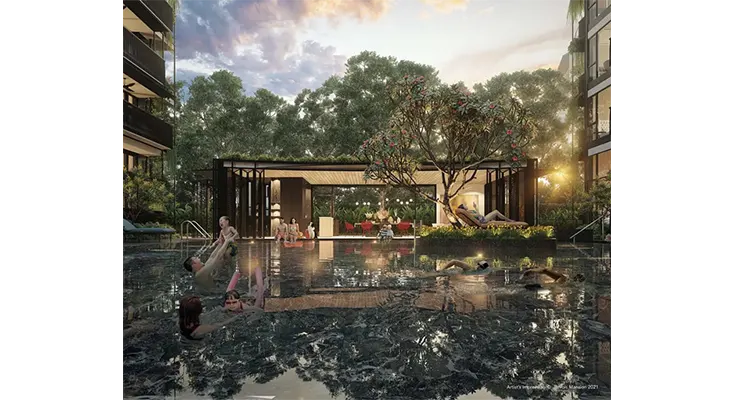
When community space correlates with the behavior of residents, then it is best. Rather than large and unproductive facilities, intentional design takes into consideration utility. Shares gather around daily interaction and silent fun in such evolutions as Tengah Garden Residences. Informal social interaction is facilitated by calm communal areas, visual relief and relaxation are achieved with landscaped areas, and shared facilities should be located in areas that are easily accessible without being in a way that interferes with individual living. The strategy promotes community but not through coercion.
Natural Elements Integrated into Living Spaces
One of the characteristics of purposeful residential design is environmental integration. Tengah Garden Residences can be regarded as a natural creation of many comforts, as it includes daylight access and airflow into its facilities planning. This approach can also be observed in Promenade Peak because building orientation and the location of windows were implemented in accordance with the environmental factors. Natural ventilation leading to better indoor comfort, less artificial sources of light, and a more moderated indoor climate are all factors in creating healthier and more comfortable living conditions.
Convenience as a Daily Living Advantage
Purposive design is a crucial factor that brings about convenience. Promenade Peak shows how planning circulation and access logically will ease the daily effort for the residents. Convenience is also a feature that is highlighted in Tengah Garden Residences with intuitive designs and practical storage designs. Fluid movement within the major living areas, easy access to common facilities and spaces that enable a multitude of activities effectively enable the residents to devote more time to living and less to managing the environment.
Conclusion
Intentional design goes further than direct convenience for long-term habitation. Tengah Garden Residences and Promenade Peak underline the need to have the flexibility in the layout and considerations updated with the lifestyle needs. Even these residential environments can also fulfill the requirements of usability, merging with the surrounding, and spatial clarity hence, demonstrate how design can be practical in enhancing the everyday urban experience as well as long-term worth to the flourishing city centres.